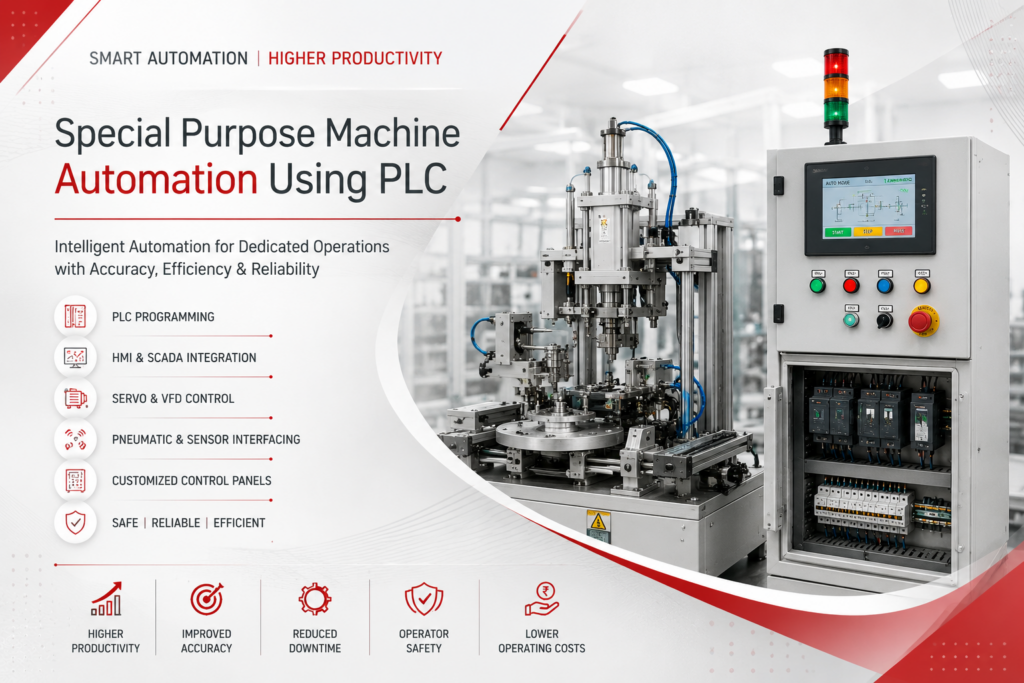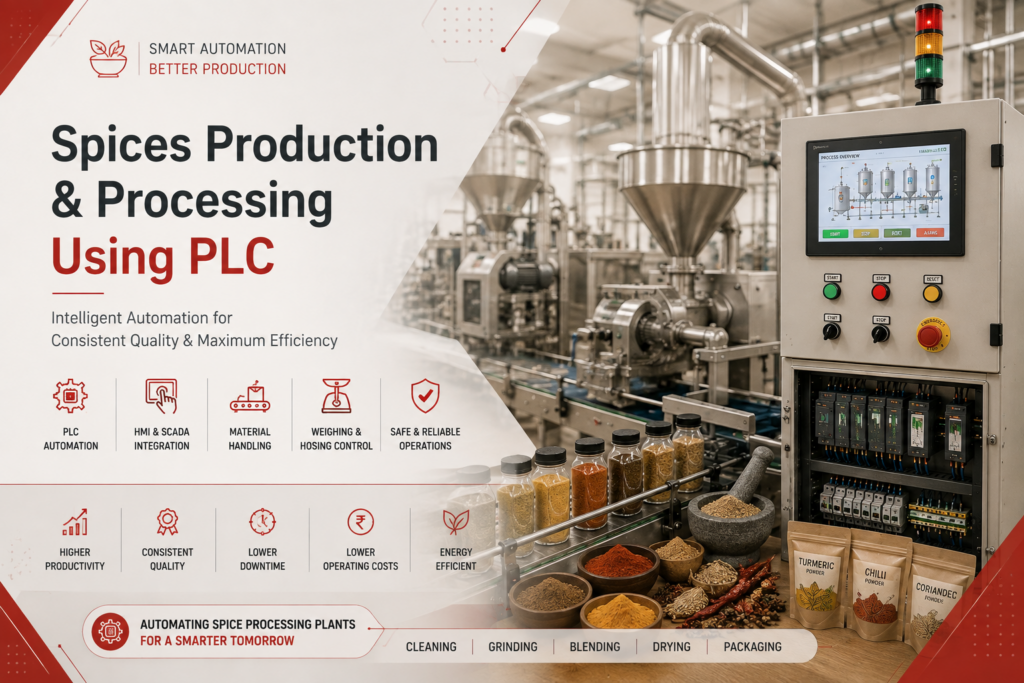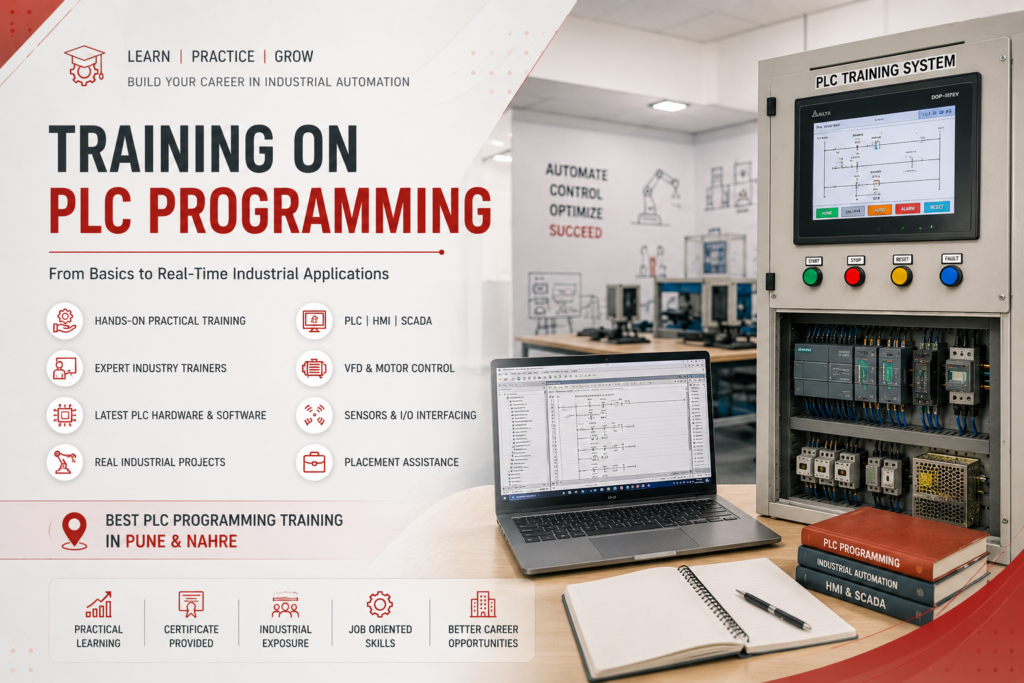
Industrial automation is transforming modern manufacturing by making machines faster, safer, more accurate, and more efficient. At the center of many automated systems is the Programmable Logic Controller (PLC). For students and professionals looking to build a career in automation, developing practical PLC and industrial control skills is essential.
If you are searching for best PLC programming Pune training, understanding the skills required for an automation engineer can help you choose the right learning path and become industry-ready.
What Does a PLC Automation Engineer Do?
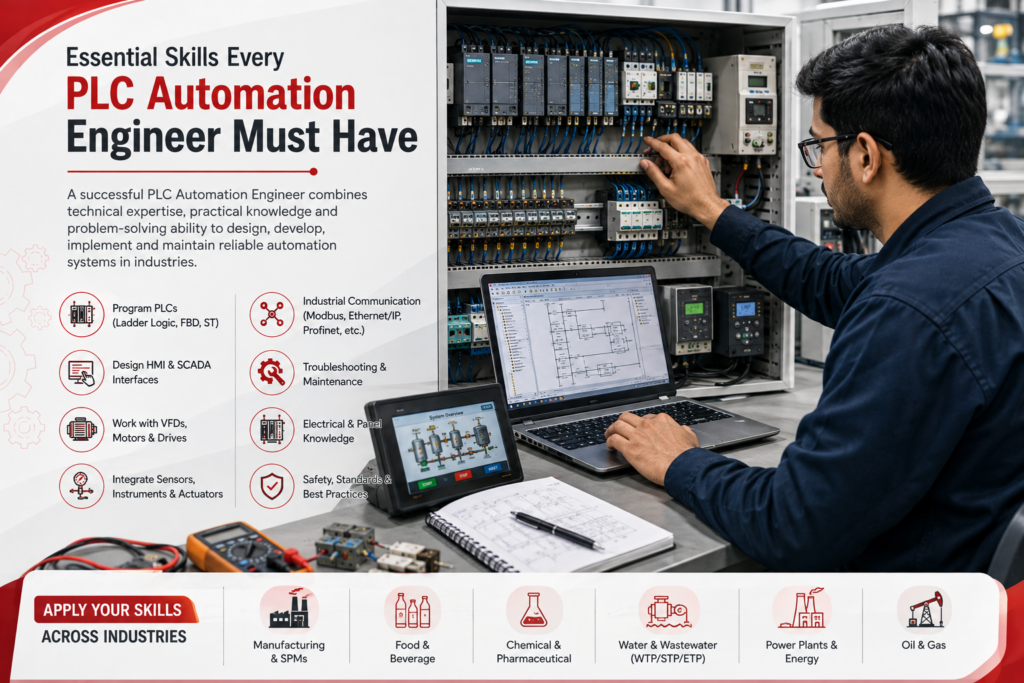
A PLC Automation Engineer designs, programs, tests, commissions, and maintains automated industrial systems. Their work can involve PLCs, HMIs, SCADA systems, VFDs, sensors, motors, control panels, industrial communication networks, and process instrumentation.
Typical responsibilities include:
- Developing PLC programs for machines and production lines
- Designing HMI screens and operator interfaces
- Configuring SCADA systems
- Integrating VFDs, servo drives, sensors, and actuators
- Troubleshooting electrical and automation systems
- Testing automation logic before commissioning
- Commissioning machines at customer sites
- Monitoring machine performance and resolving faults
- Working with industrial communication protocols
1. PLC Programming Skills
The most important skill for a PLC Automation Engineer is the ability to develop and troubleshoot PLC programs.
You should understand:
- Ladder Logic
- Function Block Diagram (FBD)
- Structured Text (ST)
- Timers and counters
- Digital and analog I/O
- Interlocks
- Sequence control
- Alarms and fault handling
- PID control basics
- Data handling and memory addressing
You should also gain practical experience with popular PLC platforms such as Siemens, Allen-Bradley, Mitsubishi, Delta, and Schneider.
Practical programming experience is much more valuable than only knowing PLC theory.
2. Electrical Control Panel Knowledge
A PLC engineer frequently works with electrical control panels. Therefore, understanding industrial electrical systems is extremely important.
You should learn:
- MCC panels
- PLC control panels
- VFD panels
- Control wiring
- Contactors and relays
- MCBs, MCCBs and overload relays
- SMPS and control transformers
- Terminal blocks
- Sensors and field devices
- Electrical safety
- Panel wiring and troubleshooting
Knowledge of electrical drawings and control circuits will make PLC troubleshooting much easier.
3. HMI Programming
An HMI allows operators to monitor and control machines.
A PLC Automation Engineer should know how to create:
- Machine overview screens
- Start/stop controls
- Manual and automatic modes
- Alarm screens
- Set-point screens
- Production counters
- Parameter screens
- Status indicators
- Fault diagnostics
Learning HMI platforms such as Siemens WinCC, Allen-Bradley PanelView, Delta HMI or other commonly used platforms can improve your employability.
4. SCADA Skills
For larger industrial systems, PLCs are often connected to SCADA systems.
Important SCADA skills include:
- Tag configuration
- Graphics development
- Alarm management
- Trend configuration
- Historical data
- User management
- Data logging
- Reports
- PLC-SCADA communication
Understanding how PLC, HMI and SCADA systems work together is an important step toward becoming a complete automation professional.
5. VFD and Motor Control
Industrial machines commonly use motors, and VFDs are widely used to control motor speed.
You should understand:
- VFD parameters
- Motor ratings
- Start/stop commands
- Speed references
- Analog signals
- Digital control
- Forward/reverse operation
- Acceleration and deceleration
- Fault diagnostics
- VFD-PLC communication
A strong understanding of VFDs helps engineers troubleshoot both electrical and automation problems.
6. Sensors and Instrumentation
Automation engineers need to understand how field devices provide information to the PLC.
Important devices include:
- Proximity sensors
- Photoelectric sensors
- Limit switches
- Pressure transmitters
- Temperature sensors
- Flow meters
- Level sensors
- Encoders
- Solenoid valves
- Control valves
You should understand the difference between digital and analog signals, including common industrial signals such as 4–20 mA and 0–10 V.
7. Industrial Communication
Modern automation systems depend heavily on communication between PLCs, HMIs, drives, instruments, and higher-level systems.
Important protocols and technologies include:
- Modbus RTU
- Modbus TCP/IP
- Ethernet/IP
- PROFINET
- PROFIBUS
- RS-232
- RS-485
- Industrial Ethernet
Learning how to configure addresses, communication parameters and troubleshooting methods is a valuable skill.
8. Troubleshooting Skills
A good automation engineer is not only a programmer but also an excellent troubleshooter.
When a machine stops, you should be able to systematically identify whether the problem is related to:
Sensor → Wiring → Input → PLC Logic → Output → Relay/Contactor → Drive → Motor → Mechanical System
Developing a structured troubleshooting approach can significantly reduce machine downtime.
9. AutoCAD and Electrical Drawing Skills
Automation engineers often need to understand electrical schematics and control-panel drawings.
Learning AutoCAD Electrical or similar design tools can help you understand:
- Control circuits
- Power circuits
- PLC I/O drawings
- Panel layouts
- Cable schedules
- Terminal diagrams
- Electrical symbols
This skill is especially useful for engineers involved in control-panel design and project execution.
10. Basic Mechanical and Pneumatic Knowledge
Automation is not limited to electrical systems. Machines also contain mechanical and pneumatic components.
Basic knowledge of:
- Pneumatic cylinders
- Directional control valves
- FRL units
- Solenoid valves
- Sensors
- Conveyors
- Gearboxes
- Motors
- Actuators
- Machine sequences
will help you understand how the complete machine operates.
11. Industrial Safety
Safety should always be a priority in industrial automation.
You should understand the purpose of:
- Emergency stop circuits
- Safety relays
- Safety interlocks
- Machine guards
- Overload protection
- Proper isolation procedures
- Safe commissioning practices
Automation engineers should never bypass safety systems simply to make a machine operate.
12. IIoT and Industry 4.0 Knowledge
Modern automation is increasingly connected to Industrial IoT and Industry 4.0 technologies.
Learning the basics of:
- Industrial gateways
- MQTT
- Cloud connectivity
- Local databases
- Machine data collection
- Production monitoring
- OEE
- Dashboards
- Predictive maintenance
can give PLC engineers an advantage as factories become more data-driven.
13. Problem-Solving and Analytical Thinking
Automation engineers regularly face unexpected machine problems. Strong analytical thinking helps you break a complex problem into smaller sections.
For example:
Machine Not Starting
→ Check Safety
→ Check Power
→ Check Sensors
→ Check PLC Inputs
→ Check PLC Logic
→ Check PLC Outputs
→ Check Contactor/VFD
→ Check Motor
→ Check Mechanical Condition
This systematic approach is one of the most valuable skills you can develop.
14. Practical Project Experience
One of the best ways to become an automation engineer is to build real projects.
Beginners can practice projects such as:
- Conveyor automation
- Traffic light control
- Motor forward/reverse control
- Tank level control
- Pump automation
- Automatic bottle filling
- Conveyor sorting system
- Temperature control
- VFD speed control
- Automatic batching system
Projects help you connect PLC programming concepts with real industrial applications.
PLC Automation Engineer Skill Roadmap
A practical learning sequence can look like this:
Electrical Basics
↓
PLC Fundamentals
↓
Ladder Logic Programming
↓
HMI Designing
↓
VFD & Motor Control
↓
Sensors & Instrumentation
↓
Industrial Communication
↓
SCADA
↓
Troubleshooting
↓
Industrial Projects
↓
Commissioning
↓
IIoT & Industry 4.0
Why Practical Training Matters
Reading about PLC programming is useful, but industrial automation requires hands-on experience. A good training program should allow learners to work with actual PLC hardware, control panels, HMIs, VFDs, sensors and industrial communication systems.
For students and professionals looking for best PLC programming Pune training, focus on programs that provide practical projects, troubleshooting exercises, industrial examples and exposure to multiple PLC platforms.
Career Opportunities After Learning PLC Automation
After developing these skills, you can explore roles such as:
- PLC Automation Engineer
- Automation Engineer
- PLC Programmer
- Control Panel Engineer
- SCADA Engineer
- HMI Engineer
- Commissioning Engineer
- Industrial Automation Engineer
- Maintenance Automation Engineer
- Process Automation Engineer
- IIoT Engineer
Conclusion
Becoming a successful PLC Automation Engineer requires more than learning ladder logic. You need a combination of PLC programming, electrical systems, HMI, SCADA, VFDs, instrumentation, industrial communication, troubleshooting, safety, and practical project experience.
If you are planning a career in industrial automation, start with the fundamentals and gradually build hands-on experience with real industrial applications. Choosing practical best PLC programming Pune training can help you develop the technical skills required to work confidently on automation projects and industrial machines.
The goal is not simply to learn how to write a PLC program—it is to understand how an entire automated machine works, how to troubleshoot it, and how to make it operate safely and efficiently.