Industrial automation is growing rapidly, creating exciting career opportunities for engineering students and fresh graduates. Industries are increasingly using advanced automation technologies to improve productivity, reduce manual work, and maintain product quality.
Among these technologies, PLC, HMI, and SCADA play an important role in modern manufacturing and industrial processes.
For students looking to build a successful career in industrial automation, learning PLC programming, HMI designing, and SCADA systems can open doors to various technical job opportunities.
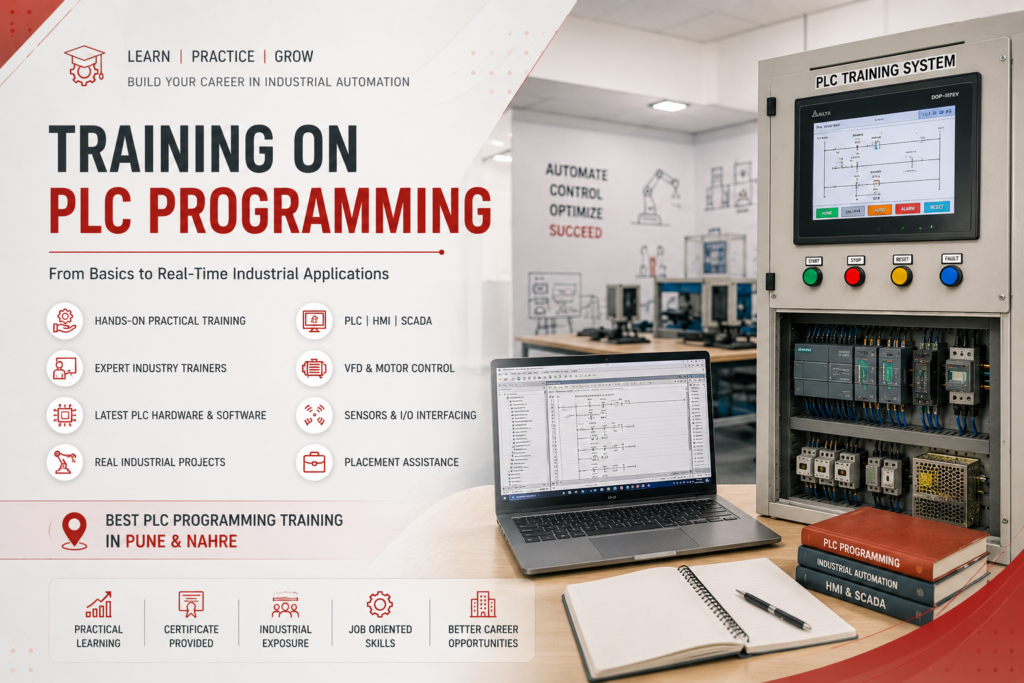
Joining practical industrial automation training, including the best plc programming pune & nahre, can help fresh engineers develop industry-relevant skills and prepare for automation jobs.
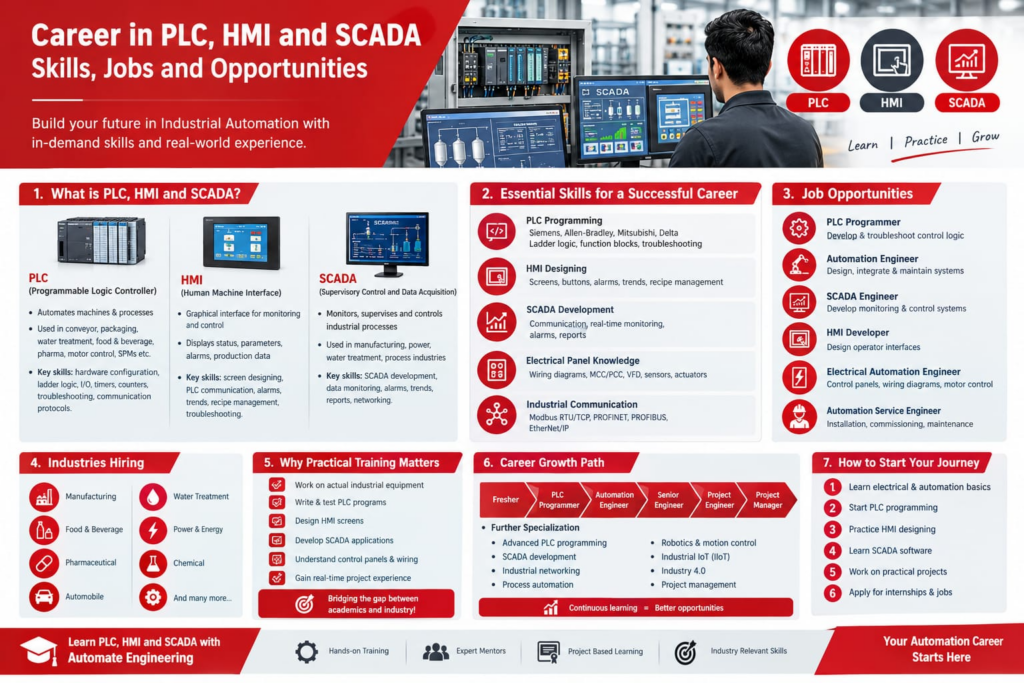
1. What Is PLC, HMI and SCADA?
Before starting a career in industrial automation, it is important to understand these three technologies.
PLC – Programmable Logic Controller
A PLC is an industrial controller used to automate machines and manufacturing processes.
PLCs are commonly used in:
- Conveyor automation systems
- Packaging machines
- Water treatment plants
- Food and beverage industries
- Pharmaceutical manufacturing
- Motor control applications
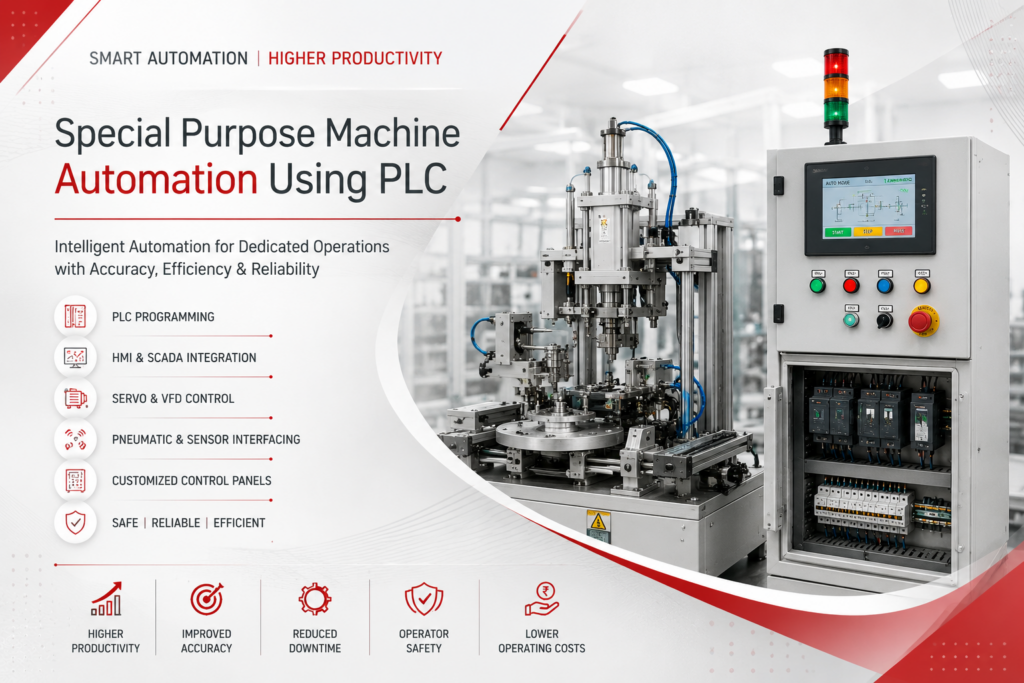
- Special Purpose Machines (SPMs)
Important PLC Skills:
- PLC hardware configuration
- Ladder Logic programming
- Digital and analog input/output
- Timers, counters, and interlocking
- PLC troubleshooting
- Industrial communication protocols
Learning PLC programming provides a strong foundation for an industrial automation career.
HMI – Human Machine Interface
HMI is a graphical interface that allows operators to monitor and control industrial machines.
HMI systems display machine status, process parameters, alarms, and production information.
Important HMI Skills:
- HMI screen designing
- PLC and HMI communication
- Alarm configuration
- Data monitoring
- Recipe management
- Process visualization
- HMI troubleshooting
HMI designing is an important skill for engineers working on industrial automation projects.
SCADA – Supervisory Control and Data Acquisition
SCADA is a software-based system used to monitor, supervise, and control industrial processes.
SCADA systems are widely used in manufacturing plants, power plants, water treatment facilities, and process industries.
Important SCADA Skills:
- SCADA screen development
- PLC-SCADA communication
- Real-time data monitoring
- Alarm and event management
- Historical data trending
- Report generation
- Industrial networking
Engineers with PLC, HMI, and SCADA knowledge can work on complete industrial automation projects.
2. Essential Skills Required for a Career in PLC, HMI and SCADA
Companies prefer automation engineers who understand both theoretical concepts and practical industrial applications.
Some important technical skills include:
PLC Programming
Learn programming using popular industrial PLC platforms such as:
- Siemens PLC
- Allen-Bradley PLC
- Mitsubishi PLC
- Delta PLC
Understanding Ladder Logic, function blocks, and PLC troubleshooting is essential.
HMI Designing
Develop practical skills in creating operator-friendly HMI screens for industrial machines.
Learn how to configure buttons, indicators, alarms, trends, and machine operating parameters.
SCADA Development
Understand how to create SCADA applications for industrial monitoring and control.
Practice configuring communication, alarms, trends, and reports.
Electrical Control Panel Knowledge
Automation engineers should understand:
- Electrical wiring diagrams
- Motor starters
- MCC and PCC panels
- VFD control panels
- PLC control panels
- Sensors and actuators
Industrial Communication
Knowledge of industrial communication protocols is highly valuable.
Important protocols include:
- Modbus RTU
- Modbus TCP/IP
- PROFINET
- PROFIBUS
- EtherNet/IP
These skills help engineers integrate different industrial automation devices.
3. Job Opportunities After PLC, HMI and SCADA Training
After completing practical industrial automation training, engineering graduates can apply for different technical positions.
1. PLC Programmer
PLC programmers develop and troubleshoot control logic for industrial machines and processes.
Key Responsibilities:
- PLC programming
- Machine sequence development
- Input/output testing
- Troubleshooting automation systems
2. Automation Engineer
Automation engineers design, develop, and maintain industrial automation systems.
Key Responsibilities:
- PLC and HMI integration
- Automation system testing
- Machine commissioning
- Industrial troubleshooting
3. SCADA Engineer
SCADA engineers develop monitoring and supervisory control systems for industrial applications.
Key Responsibilities:
- SCADA application development
- Data monitoring
- Alarm configuration
- Industrial communication setup
4. HMI Developer
HMI developers design graphical interfaces for machine operators.
Key Responsibilities:
- HMI screen designing
- PLC communication
- Alarm and trend configuration
- Operator interface development
5. Electrical Automation Engineer
Electrical automation engineers work with electrical control panels and automation equipment.
Key Responsibilities:
- Control panel designing
- Electrical wiring diagrams
- Motor control systems
- PLC panel testing
6. Automation Service Engineer
Service engineers install, troubleshoot, and maintain automation systems at industrial sites.
Key Responsibilities:
- PLC troubleshooting
- Machine maintenance
- Site commissioning
- Technical support
4. Industries Hiring PLC, HMI and SCADA Engineers
Industrial automation professionals can explore opportunities across multiple industries.
Manufacturing Industry: Machine automation, conveyor systems, assembly lines, and production monitoring.
Food and Beverage Industry: Bottling plants, packaging machines, filling systems, and process automation.
Pharmaceutical Industry: Batch processing, automated production equipment, and process monitoring.
Automobile Industry: Robotic assembly lines, material handling, and automated manufacturing systems.
Water Treatment Industry: Water treatment plants, sewage treatment plants, and pumping station automation.
Power and Energy Industry: Power plant monitoring, electrical distribution systems, and energy management.
Chemical Industry: Process control, instrumentation, and plant automation.
These industries require engineers with practical knowledge of PLC, HMI, SCADA, electrical systems, and industrial communication.
5. Why Practical PLC Training Is Important for Freshers
Many engineering students understand automation concepts but have limited experience working with actual industrial equipment.
Practical training helps bridge the gap between academic knowledge and industrial requirements.
Hands-on training allows students to:
- Write and test PLC programs
- Work with industrial PLC hardware
- Design HMI screens
- Develop basic SCADA applications
- Understand electrical control panels
- Troubleshoot automation systems
- Work on real-time industrial projects
Students searching for best plc programming pune & nahre should focus on training that provides practical PLC programming, HMI designing, SCADA development, and industrial project experience.
Practical learning helps freshers build technical confidence and prepare for entry-level automation jobs.
6. Career Growth in Industrial Automation
Industrial automation offers opportunities for continuous technical learning and career development.
A typical career path may look like this:
Engineering Fresher → PLC Programmer / Junior Automation Engineer → Automation Engineer → Senior Automation Engineer → Automation Project Engineer → Automation Project Manager
With experience, professionals can specialize in:
- Advanced PLC programming
- SCADA system development
- Industrial networking
- Process automation
- Robotics and motion control
- Industrial IoT (IIoT)
- Industry 4.0 technologies
- Automation project management
Career growth depends on technical skills, practical experience, project exposure, and problem-solving abilities.
7. How to Start a Career in PLC, HMI and SCADA
Students interested in industrial automation can follow these steps.
Step 1: Learn Electrical and Automation Basics
Understand electrical components, sensors, actuators, relays, contactors, and motor control circuits.
Step 2: Start PLC Programming
Learn PLC hardware configuration, Ladder Logic, timers, counters, and industrial control applications.
Step 3: Practice HMI Designing
Develop HMI screens and establish communication between PLC and HMI.
Step 4: Learn SCADA Software
Understand SCADA development, real-time monitoring, alarm management, and data visualization.
Step 5: Work on Practical Projects
Practice applications such as conveyor automation, motor control, tank level control, and industrial process monitoring.
Step 6: Apply for Internships and Jobs
Look for opportunities with industrial automation companies, machine manufacturers, system integrators, and manufacturing plants.
8. Learn PLC, HMI and SCADA with Automate Engineering
Automate Engineering provides industrial automation training focused on developing practical technical skills.
The training covers important industrial automation technologies and applications.
Training Areas Include:
- Siemens PLC Programming
- Allen-Bradley PLC Programming
- Mitsubishi PLC Programming
- HMI Designing
- SCADA Development
- Electrical Control Panel Designing
- VFD and Motor Control
- Industrial Sensors and Instrumentation
- Industrial Communication
- Industrial IoT and Industry 4.0
- Practical Industrial Automation Projects
Students looking for best plc programming pune & nahre can explore practical industrial automation training at Automate Engineering to strengthen their PLC, HMI, and SCADA skills.
The objective is to help engineering students and fresh graduates understand industrial automation technologies and develop skills relevant to industry requirements.
Conclusion
A career in PLC, HMI and SCADA offers opportunities for engineering students and fresh graduates interested in industrial automation.
As manufacturing industries continue adopting automation technologies, engineers with practical PLC programming, HMI designing, SCADA development, and troubleshooting skills can explore various career opportunities.
Building strong technical fundamentals, completing practical training, and working on industrial projects are important steps toward becoming a successful automation professional.
Start your industrial automation learning journey with Automate Engineering and develop the skills needed for a career in PLC, HMI and SCADA.
Website: www.automateengg.com
Email: connect@automateengg.com
Contact: +91 9371063103
SEO Keywords
PLC programming training, HMI designing course, SCADA training, industrial automation training, PLC programming for beginners, PLC HMI SCADA career, automation engineer jobs, industrial automation career opportunities, best plc programming pune & nahre, practical PLC training, Siemens PLC programming, Allen-Bradley PLC training, SCADA software training, automation engineering skills.
#PLCProgramming #HMIandSCADA #IndustrialAutomation #AutomationTraining #AutomationCareer