Introduction
Digital transformation is changing how manufacturing plants operate by connecting machines, automating processes, and using real-time data to improve production decisions. Traditional manufacturing systems are increasingly being integrated with PLCs, SCADA, HMI, Industrial Internet of Things (IIoT), robotics, and data analytics.
These technologies help manufacturers improve production visibility, monitor equipment performance, reduce unplanned downtime, and respond more effectively to changing production requirements.
Digital transformation is not simply about installing new technology. It involves improving how machines, people, processes, and production data work together.
What Is Digital Transformation in Manufacturing?
Digital transformation in manufacturing refers to the integration of digital technologies into production, maintenance, quality control, energy management, and plant operations.
For example, in a traditional factory, an operator may manually record machine output and report equipment problems. In a digitally connected plant, PLCs collect machine data, SCADA displays operating conditions, and an IIoT platform can analyse production trends and share performance reports.
A digitally transformed manufacturing plant may include:
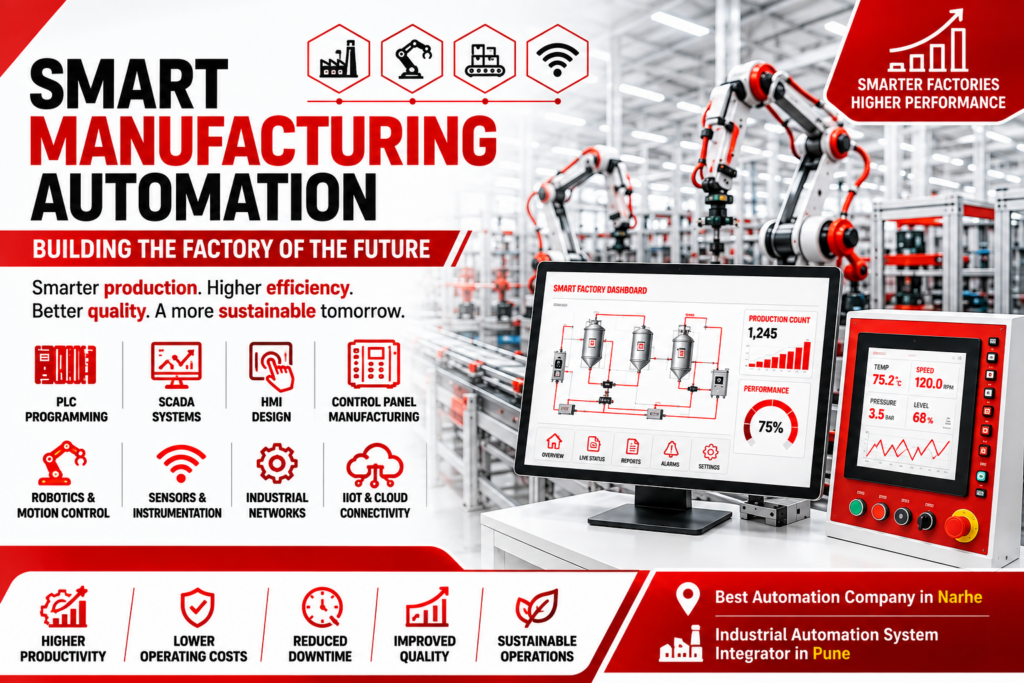
- PLC Automation: Controls machine sequences and production processes.
- HMI Systems: Allow operators to monitor and operate machines.
- SCADA Systems: Provide supervisory control, alarms, trends, and plant-wide visibility.
- IIoT Connectivity: Transfers selected machine data to monitoring platforms.
- Robotics: Automates repetitive handling, assembly, and material movement.
- Data Analytics: Helps identify production losses, equipment issues, and performance trends.
- Digital Reporting: Provides production, downtime, quality, and energy reports.
Key Technologies Driving Digital Manufacturing
1. PLC and SCADA Integration
PLCs provide the control logic required to operate industrial machines, conveyors, pumps, motors, and automated production lines.
SCADA systems collect and display information from multiple controllers, allowing operators to monitor machine status, process parameters, alarms, and historical trends.
For example, a packaging plant can use PLCs to control filling and capping machines while SCADA displays production counts, machine stoppages, and operating conditions.
2. Industrial Internet of Things (IIoT)
IIoT connects industrial equipment, sensors, controllers, and monitoring platforms to exchange operational data.
Manufacturers can use IIoT to monitor machine performance, energy consumption, equipment health, and production conditions across different production areas.
Remote monitoring can also help authorised engineers review machine status without being physically present at every machine.
3. Robotics and Machine Automation
Industrial robots and automated machines perform repetitive and precision-based tasks such as pick-and-place operations, welding, assembly, palletising, and packaging.
When integrated with PLCs, sensors, conveyors, and safety systems, robotics can support coordinated production and reduce repetitive manual work.
4. Data Analytics and Production Monitoring
Manufacturing plants generate data from machines, sensors, quality checks, and production systems. Analytics tools help convert this information into useful performance indicators.
Common measurements include:
- Production output and cycle time
- Machine availability and downtime
- Rejection and defect rates
- Equipment operating hours
- Energy consumption
- Maintenance and fault history
These indicators help production teams identify recurring problems and prioritise improvement activities.
5. Digital Twins and Simulation
A digital twin is a digital representation of a physical machine, process, or production system. Depending on its design, it may use live data to reflect the current operating state.
Manufacturers can use simulation and digital models to study process changes, evaluate production layouts, and identify possible improvements before implementing them on actual equipment.
The level of accuracy depends on the model, available data, and how closely it represents the physical system.
How Digital Transformation Works in a Manufacturing Plant
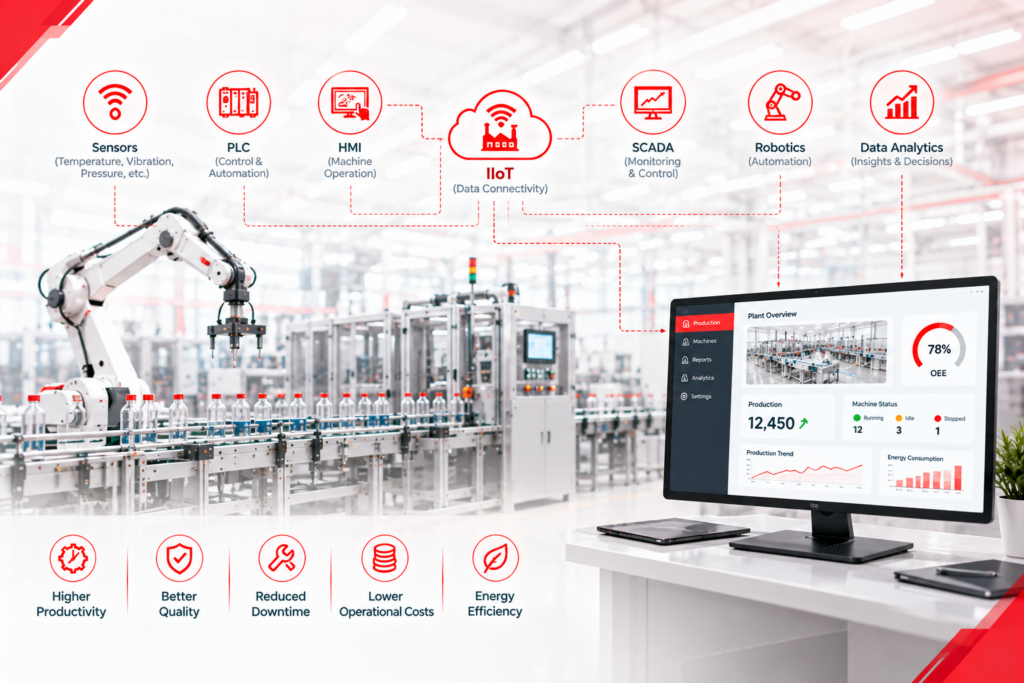
A digitally connected production system combines machine control, data collection, monitoring, and analysis.
- Sensors collect data: Sensors measure temperature, pressure, position, flow, vibration, or other operating parameters.
- PLCs control equipment: Controllers process inputs and operate motors, valves, actuators, and other devices.
- HMI and SCADA display information: Operators view machine status, production values, and alarms.
- Industrial networks transfer data: Compatible communication systems connect controllers and monitoring applications.
- IIoT platforms collect selected information: Data is made available for plant-wide monitoring and analysis.
- Analytics support decisions: Production and maintenance teams review trends and take appropriate action.
This architecture allows local machine control to work alongside broader production monitoring and reporting systems.
Practical Example: Digital Transformation of a Packaging Line
Consider a manufacturing plant with an automated bottle-filling and packaging line.
In a conventional setup, operators may record production output manually and identify stoppages only when a machine stops working.
After digital integration:
- Sensors detect bottle presence and monitor machine operations.
- PLCs coordinate filling, capping, labelling, and conveyor movement.
- HMI screens display machine status and allow authorised operator inputs.
- SCADA tracks production counts, alarms, downtime, and selected process parameters.
- IIoT connectivity makes selected production information available to authorised users.
- Reports help identify bottlenecks, recurring stoppages, and opportunities to improve cycle time.
The result is better production visibility and more structured decision-making, provided the collected data is accurate and actively used.
Applications Across Manufacturing Industries
Automotive Manufacturing
Digital systems monitor assembly lines, robotic workstations, conveyors, and machine cycles. Production data helps identify bottlenecks and recurring equipment interruptions.
Pharmaceutical Manufacturing
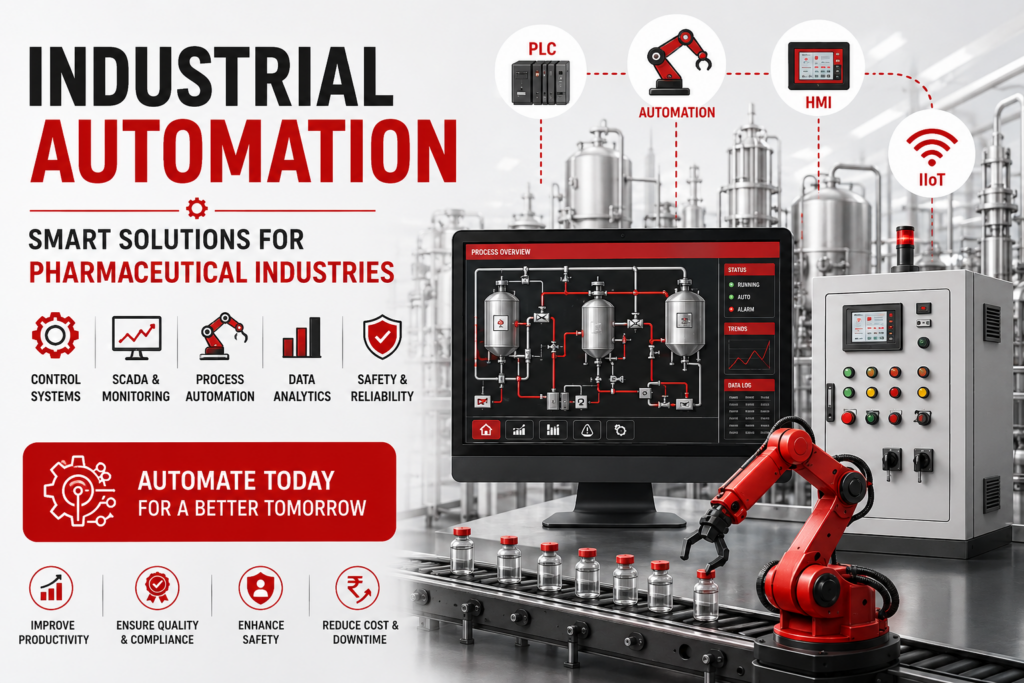
Automation and digital monitoring support equipment operation, process parameter monitoring, alarm management, and production documentation. Applicable validation, traceability, and data integrity requirements must be considered.
Food and Beverage Processing
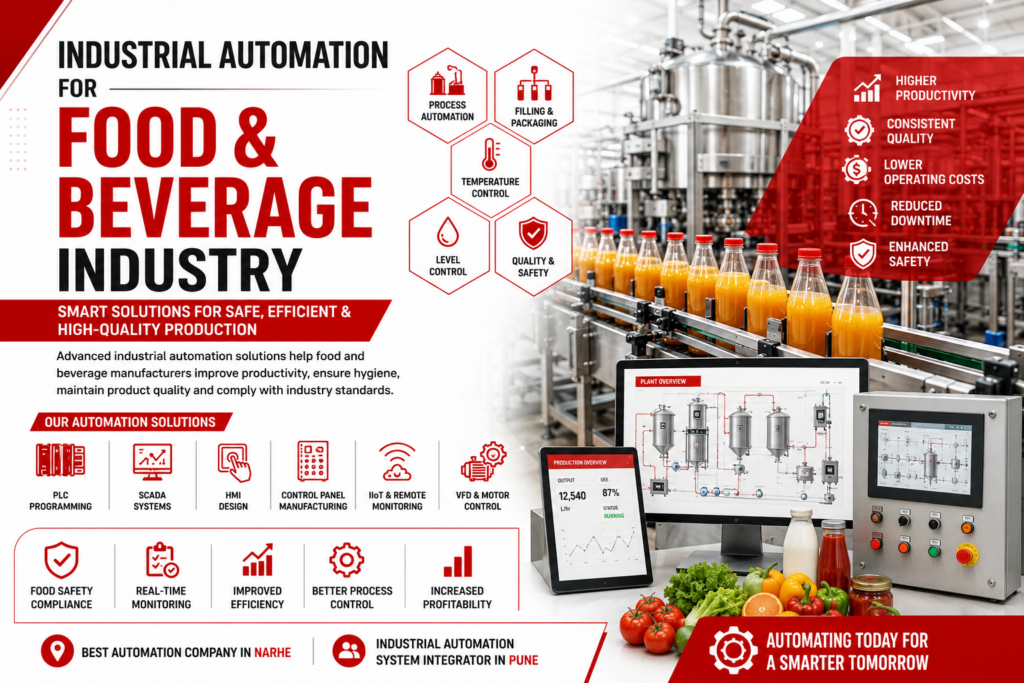
PLCs, sensors, HMI, and SCADA can coordinate mixing, filling, packaging, temperature control, and material handling processes.
Electronics Manufacturing
Automated assembly equipment, inspection systems, robotics, and production monitoring can help track output, identify defects, and improve process consistency.
Water and Process Industries
Digitally connected instrumentation can monitor flow, pressure, tank levels, pump operation, and other process variables across treatment and production facilities.
Benefits of Digital Transformation
- Improved Production Visibility: Provides clearer information about machine and line performance.
- Reduced Unplanned Downtime: Helps teams identify faults and recurring stoppages.
- Better Quality Monitoring: Makes it easier to track process conditions and quality-related data.
- Improved Maintenance Planning: Equipment history and condition data can support maintenance decisions.
- Higher Operational Efficiency: Identifies bottlenecks, idle time, and opportunities for process improvement.
- Energy Monitoring: Helps identify equipment and processes with high energy consumption.
- Data-Driven Decisions: Enables production teams to use measured performance rather than relying only on manual observations.
- Scalable Automation: Allows additional machines and monitoring functions to be integrated as requirements grow.
The results depend on the initial plant condition, technology selection, system integration, workforce training, and ongoing improvement efforts.
Challenges in Digital Transformation
Manufacturing plants may face challenges when connecting older machines with modern digital systems. Different equipment brands, incompatible protocols, poor data quality, and limited network infrastructure can complicate integration.
Cybersecurity is another important consideration because connected operational technology can introduce new access points. Industrial networks should be designed with appropriate segmentation, access controls, secure remote access, backups, and monitoring.
Plants should also define clear objectives before investing in new technology. Starting with a specific problem—such as recurring conveyor downtime or excessive energy use—can make implementation easier to measure and manage.
Role of Industrial Automation in Digital Transformation
Industrial automation provides the foundation for digital manufacturing. PLCs execute control logic, sensors measure real operating conditions, VFDs regulate motor speed, and HMI and SCADA systems display machine and process information.
When these technologies are connected through suitable industrial communication and IIoT systems, manufacturers can build a more complete picture of plant performance.
A practical digital transformation strategy often starts with reliable machine control and data collection, then expands into production dashboards, remote monitoring, analytics, and advanced optimisation.
Conclusion
Digital transformation of manufacturing plants combines industrial automation, connected equipment, production data, and digital monitoring to improve operational visibility and support better decisions.
Integrating PLCs, SCADA, HMI, IIoT, robotics, and data analytics can help manufacturers monitor production, identify equipment problems, improve quality tracking, and plan maintenance more effectively.
Successful transformation requires reliable automation, suitable integration, cybersecurity, and clearly defined production goals. For manufacturers planning these improvements, an experienced Industrial Automation System Integrator in Pune can help connect control panels, automation equipment, and monitoring systems according to plant requirements.
Automate Engineering works with industrial automation technologies, PLC and SCADA integration, HMI systems, VFD applications, and electrical control panel solutions for industrial applications.
SEO Keywords
Digital Transformation of Manufacturing Plants, Digital Manufacturing, Industrial Automation Solutions, Smart Manufacturing, Industry 4.0, PLC Programming, SCADA Automation, HMI Systems, IIoT in Manufacturing, Factory Automation, Production Monitoring, Industrial Data Analytics, Manufacturing Automation Integration, Industrial Control Panel, Industrial Automation System Integrator in Pune, Best Automation Company in Narhe.
#DigitalTransformation #DigitalManufacturing #IndustrialAutomation #SmartManufacturing #Industry40 #PLCAutomation #SCADA #IIoT #FactoryAutomation #ProductionMonitoring #IndustrialAutomationSolutions #PuneAutomation