Industrial automation is transforming manufacturing, process industries, packaging, pharmaceuticals, food and beverage, water treatment, and many other sectors. As industries adopt smarter machines and automated production systems, the demand for skilled automation engineers is increasing.
Among the most important technologies an automation engineer should understand are PLC, HMI, and SCADA. These technologies work together to control machines, monitor industrial processes, collect data, and improve production efficiency.
For students and professionals looking to build a career in industrial automation, developing practical skills in PLC programming, HMI designing, SCADA development, electrical control systems, and industrial communication can provide a strong foundation.
What Is PLC?
A Programmable Logic Controller (PLC) is an industrial computer used to control machines and automated processes.
A PLC receives signals from field devices such as:
- Proximity sensors
- Photoelectric sensors
- Limit switches
- Pressure sensors
- Temperature sensors
- Level sensors
- Flow meters
It processes these signals according to the programmed logic and controls output devices such as:
- Motors
- Contactors
- Solenoid valves
- Pneumatic systems
- Relays
- VFDs
- Servo drives
PLC programming is therefore one of the most important skills for an automation engineer.
Important PLC Programming Skills
An automation engineer should understand different PLC programming concepts, including:
1. Ladder Logic
Ladder Logic is one of the most widely used PLC programming languages in industrial automation.
Engineers should know:
- Normally Open and Normally Closed contacts
- Coils
- Timers
- Counters
- Set/Reset logic
- Interlocks
- Latching circuits
- Sequencing
- Analog processing
2. PLC Hardware Configuration
Practical knowledge of PLC hardware is equally important. Engineers should understand:
- CPU selection
- Digital Input and Output modules
- Analog Input and Output modules
- Communication modules
- Power supplies
- Remote I/O
- Expansion modules
3. PLC Troubleshooting
A good automation engineer should be able to identify problems in:
- PLC programs
- Sensors
- Wiring
- I/O modules
- Communication networks
- Drives
- Control panels
Troubleshooting skills are especially valuable during machine commissioning and plant maintenance.
Why HMI Skills Are Important
HMI (Human Machine Interface) provides an interface between the operator and the machine.
An HMI allows operators to:
- Start and stop machines
- Monitor process values
- Change setpoints
- View alarms
- Monitor machine status
- Display production information
- Control manual operations
An automation engineer should know how to design an HMI that is simple, reliable, and easy for operators to understand.
Important HMI Skills
HMI training should include:
- Screen designing
- Push buttons
- Indicators
- Numeric displays
- Analog meters
- Alarm screens
- Trend displays
- Recipe management
- User authentication
- PLC-HMI communication
Popular HMI platforms include Siemens, Allen-Bradley, Mitsubishi, Delta, Weintek, and other industrial HMI systems.
What Is SCADA?
SCADA (Supervisory Control and Data Acquisition) is used for monitoring and supervising industrial processes.
Compared with a local HMI, SCADA can provide centralized monitoring of multiple machines, production lines, or plant areas.
A SCADA system can display:
- Real-time process data
- Equipment status
- Historical trends
- Alarms
- Production information
- Energy consumption
- Reports
- Process parameters
SCADA is widely used in industries such as manufacturing, pharmaceuticals, water treatment, power generation, oil and gas, and food processing.
Important SCADA Skills for Automation Engineers
An automation engineer should develop practical knowledge of:
- SCADA screen development
- Tag configuration
- Alarm management
- Historical data
- Trends and graphs
- Data logging
- User management
- Reports
- PLC-SCADA communication
- Industrial networking
Knowledge of platforms such as Siemens WinCC, Rockwell FactoryTalk View, Ignition, and other SCADA solutions can be useful depending on the industry.
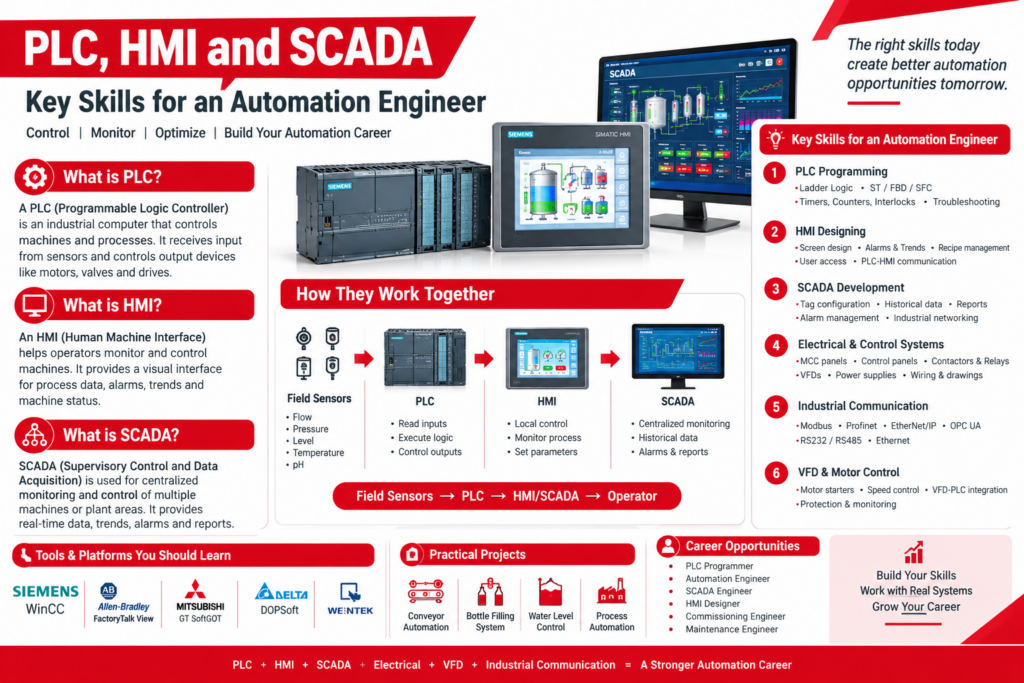
PLC, HMI and SCADA: How They Work Together
PLC, HMI, and SCADA are often connected as a complete automation system.
Field Sensors → PLC → HMI/SCADA → Operator
For example, consider an automated water treatment plant.
Sensors measure:
- Flow
- Pressure
- Level
- pH
- Temperature
The PLC receives the sensor signals and executes the control logic. The HMI allows the local operator to control and monitor the equipment. SCADA can provide centralized monitoring, historical data, alarms, and reports.
Understanding this complete architecture is an essential skill for an automation engineer.
Industrial Communication Skills
Modern automation engineers also need knowledge of industrial communication protocols.
Important technologies include:
- Ethernet
- Modbus RTU
- Modbus TCP/IP
- Profibus
- Profinet
- EtherNet/IP
- RS232
- RS485
- OPC UA
Communication skills help engineers connect PLCs with HMIs, SCADA systems, VFDs, servo drives, remote I/O, energy meters, and other industrial devices.
Electrical Control Panel Knowledge
PLC programming alone is not enough for a successful career in industrial automation.
An automation engineer should also understand basic electrical control systems, including:
- MCC panels
- PLC panels
- Control panels
- Contactors
- Relays
- Circuit breakers
- Overload relays
- VFDs
- SMPS
- Terminal blocks
- Control transformers
- Industrial wiring
Knowledge of electrical drawings and control-panel wiring makes PLC troubleshooting and commissioning much easier.
VFD and Motor Control
Motors are fundamental components of industrial machines.
Automation engineers should understand:
- Direct-on-line starters
- Star-delta starters
- VFD operation
- Motor protection
- Speed control
- Frequency and RPM
- Acceleration and deceleration
- VFD-PLC communication
Integrating PLCs with VFDs is a common requirement in industrial automation projects.
Programming Languages Automation Engineers Should Know
Apart from Ladder Logic, engineers can benefit from learning other IEC 61131-3 programming methods, such as:
- Structured Text (ST)
- Function Block Diagram (FBD)
- Sequential Function Chart (SFC)
Structured Text is particularly useful for mathematical calculations, data handling, complex logic, and advanced automation applications.
Practical Automation Projects
The best way to develop automation skills is through practical projects.
Students can work on projects such as:
Conveyor Automation
A conveyor system can include:
- Sensors
- Motors
- VFD
- PLC
- HMI
- Emergency stop
- Product counting
Automatic Bottle Filling System
The project can include:
- Bottle detection
- Conveyor control
- Filling valve control
- Level monitoring
- Counting
- HMI monitoring
Water Level Control
A PLC can automatically control pumps based on tank-level sensors while the HMI displays:
- Tank level
- Pump status
- Auto/manual mode
- Alarms
Practical projects help students understand how PLC, HMI, sensors, motors, and control panels work together.
Why Choose Practical PLC Training in Pune?
Pune is an important industrial and engineering hub with opportunities related to manufacturing, automotive, process automation, electrical systems, and industrial technology.
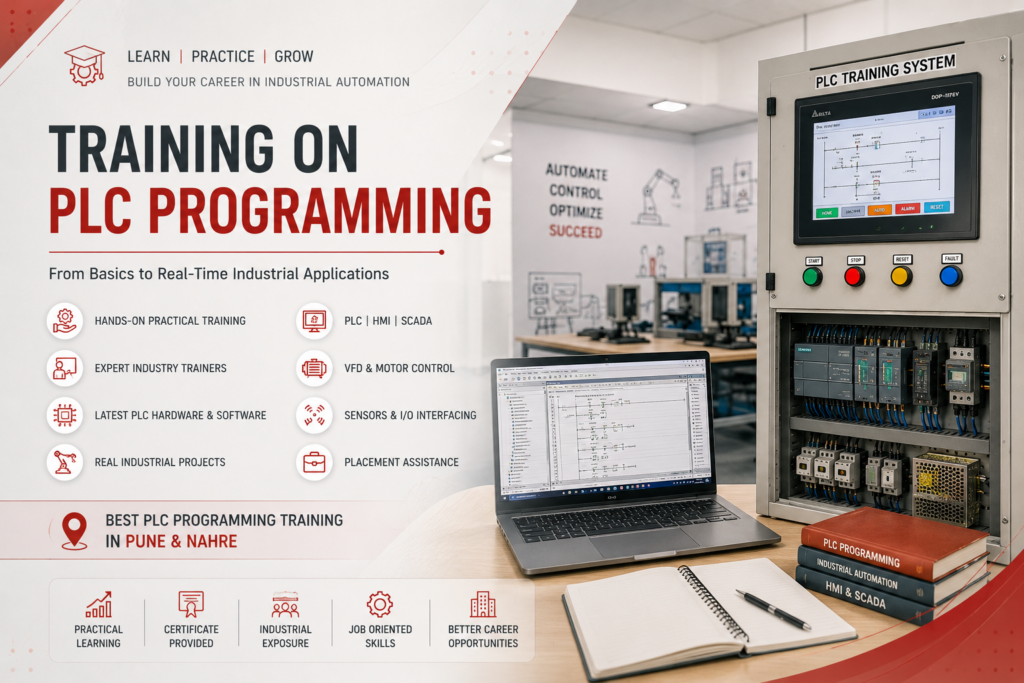
Students searching for best PLC programming Pune training should look for programs that provide practical exposure rather than only theoretical classes.
A good PLC training program should include:
- PLC programming
- HMI designing
- SCADA
- Electrical control panels
- VFD
- Industrial communication
- Sensors
- Troubleshooting
- Machine automation
- Practical projects
The objective should be to develop engineers who can actually program, troubleshoot, commission, and maintain industrial automation systems.
NAHRE and Industrial Automation Learning
For students and professionals exploring automation education and technical career opportunities, NAHRE can also be considered as part of the broader technical-learning ecosystem.
When selecting an automation training program, students should focus on practical exposure, experienced trainers, industrial projects, and opportunities to work with real automation hardware.
The right combination of PLC + HMI + SCADA + Electrical + VFD + Industrial Communication can significantly improve an engineer’s technical capabilities.
Career Opportunities in Industrial Automation
After developing these skills, professionals can explore roles such as:
- PLC Programmer
- Automation Engineer
- Controls Engineer
- PLC-SCADA Engineer
- HMI Designer
- Commissioning Engineer
- Maintenance Automation Engineer
- Industrial Automation Engineer
- Control Panel Engineer
- SCADA Engineer
Industries hiring automation professionals include:
- Automotive
- Manufacturing
- Pharmaceuticals
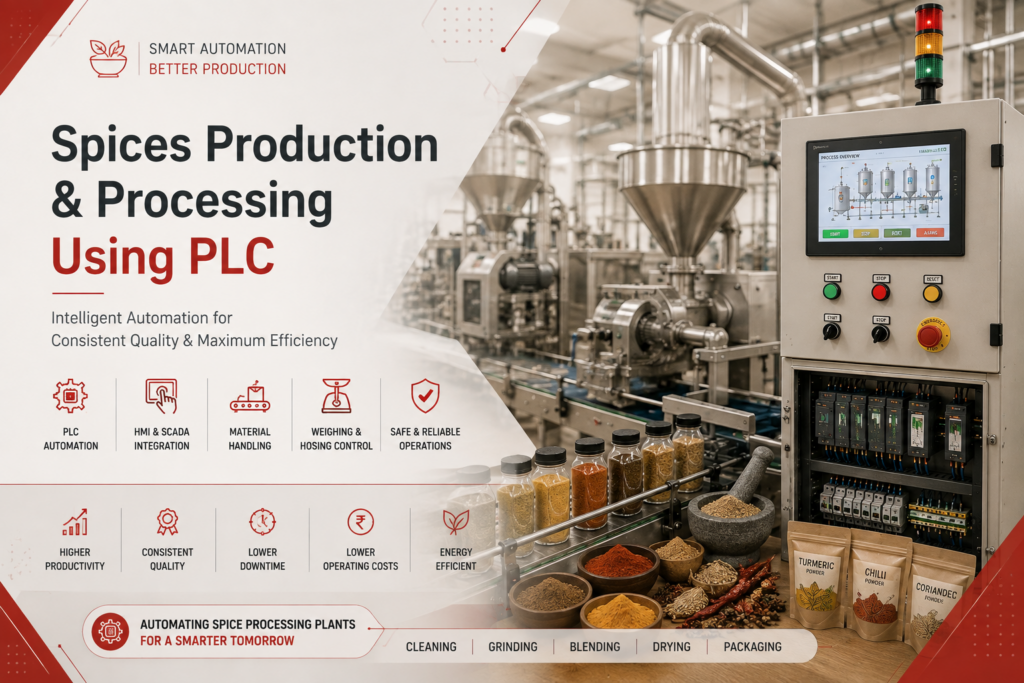
- Food and Beverage
- Chemicals
- Water Treatment
- Packaging
- Power
- Oil and Gas
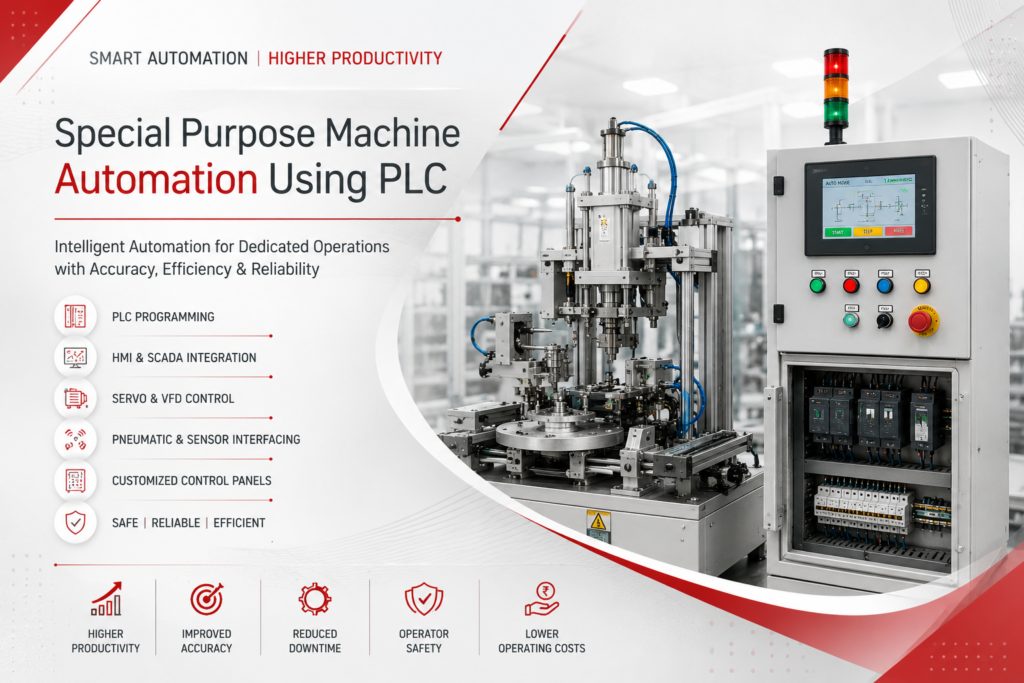
- Special Purpose Machines
Conclusion
A successful automation engineer needs more than basic PLC programming knowledge. The ability to work with PLC, HMI, SCADA, VFDs, electrical control panels, sensors, industrial networks, and troubleshooting is becoming increasingly important.
For students looking for best PLC programming Pune training, the ideal approach is to choose practical, project-oriented learning that provides exposure to real industrial automation hardware and software.
Building strong skills in PLC programming, HMI designing, SCADA, industrial communication, and commissioning can help aspiring engineers become job-ready and develop long-term careers in industrial automation.